
Profile
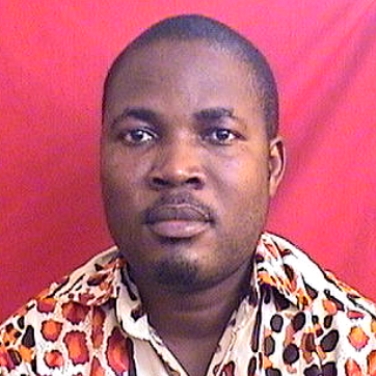
Mac Elikem Kwabla Nutsuakor is a conservation biologist with more than 20 years of research, academic and field experience in Ghana’s Upper Guinean forests and savannah-forest landscapes. He has lectured at KNUST since 2022, where he teaches and supports applied wildlife research, biodiversity monitoring and field-method development. His expertise spans large-mammal monitoring, camera trapping, patrol-effort analysis, bird community ecology, malacology, human-wildlife conflict, community conservation and REDD+. He holds an MSc in Forest Ecology and Forest Science from Georg-August-Universität Göttingen, Germany (2015), a BSc in Environment and Natural Resources Management from the University of Ghana (2011), and a Diploma in Natural Resources Management from KNUST (2003).
His field career began in 2004 as a team member on the GEF/World Bank-supported southern Ghana biodiversity inventory, which covered faunal surveys across 24 Globally Significant Biodiversity Areas. He went on to conduct large-mammal surveys in the Bia and Ankasa Conservation Areas in 2007 and 2009 under the EU/Wildlife Division Protected Areas Development Programme, and in 2008 he supported elephant movement and corridor studies between Digya National Park and Kogyae Strict Nature Reserve, funded by the International Foundation for Science. That same year he contributed to a baseline faunal and ethno-biological assessment of the Yazori-Kaden CREMA near Mole National Park for A Rocha Ghana and the IUCN Netherlands Ecosystem Grants Programme. In 2017 he supported field monitoring of endangered primates and illegal activities in three forest reserves under a BirdLife International-funded project. He coordinated a biodiversity inventory at KNUST in 2018, led an ecological assessment at Avu Lagoon and Wechiau for the Calgary Zoo Foundation in 2024, and in 2025 served as Technical Director for human-elephant coexistence work in the Red Volta Forest Landscape for the International Elephant Foundation. He has also carried out bird studies in Kakum and Bia and malacological studies in the Atewa and Bia landscapes.
Beyond academia, he provides ecological expertise to environmental impact assessments for large-scale mining firms and works as a high conservation value assessor on sustainability issues. He is a member of the African Golden Cat Conservation Alliance.
His publications address protected-area law-enforcement effort, elephant crop-raiding and conservation effort at Bia, human-wildlife conflict in the Chichibon corridor, the effect of protected-area category on mammal abundance in western Ghana, bird community structure in logged tropical forest, and the Yazori-Kaden CREMA baseline survey. They include a 2024 paper in Scientific African on variation in patrol effort and the number of surveys needed for efficient law enforcement in protected areas, and a 2012 paper in the Journal of Biology and Environmental Sciences on the effect of protected-area category on mammal abundance. His work links field science to protected-area management and community resource governance.