
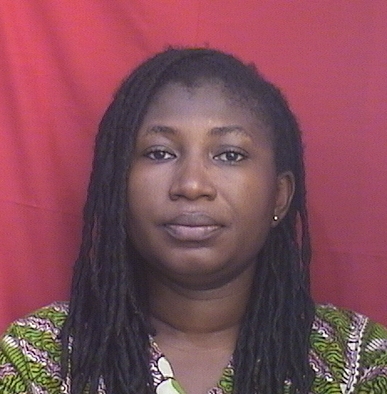
We Prepare Women To Enter Stem. But Do We Prepare Them For What Comes Next?
An advocacy article introducing Beyond the Straight Path: Women Navigating STEM, Life & Leadership
For years, we have encouraged girls to study science, technology, engineering and mathematics (STEM). We tell them they belong in laboratories, engineering firms, construction sites, technology companies, universities and boardrooms. We organise STEM clinics, mentorship programmes, scholarships and outreach activities. We celebrate the young woman who chooses engineering when few girls around her do.
And rightly so.
But I have increasingly found myself thinking about another question:
What happens after we get her through the door?
A young woman can leave university with a degree, confidence, ambition and a clear picture of the career she intends to build. She has spent years preparing academically for her profession. She has passed examinations, completed projects and acquired technical skills. She feels ready to take on the world.
Then she meets the world.
The Part of the STEM Pipeline We Talk About Less
The gender gap in STEM remains significant. UNESCO reports that women make up only 35% of STEM graduates globally, a proportion that has remained essentially unchanged for a decade. In Ghana, the World Bank's 2026 Gender Data Landscape reports that women accounted for 22.2% of tertiary STEM graduates in 2023.
These figures make the case for continuing to encourage girls to enter STEM. But increasing enrolment is only part of the challenge.
There is another question further along the pipeline: What enables women not simply to enter STEM, but to remain, progress and lead within it?
The transition from university to professional life introduces realities that a technical education may never have prepared a young woman to navigate.
There are workplace cultures to understand. There are moments when competence does not automatically translate into confidence, recognition or opportunity. There are decisions about career progression, further education, relationships, family, mobility and leadership. There may be workplaces in which very few people in the room look like her. There may be mentors, or there may be none.
Sometimes there are setbacks. Sometimes the career she imagined at 21 is no longer the career she wants later. Sometimes an opportunity arrives disguised as a detour. And sometimes life simply refuses to follow the plan.
This does not mean women are inadequately prepared or incapable of navigating professional life. It means that academic preparation and career preparation are not always the same thing.
Perhaps We Need to Tell More Complete Stories
When successful women are presented to younger generations, we often see the finished picture.
We see the professor, engineer, scientist, entrepreneur, executive or industry leader. We hear about qualifications, awards and positions.
Those stories are important. Representation matters. Seeing a woman occupying a space can help another woman imagine herself there.
But younger women also need to hear what happened between the graduation photograph and the success story.
What was her first job really like? Was she always confident? Did she ever question whether she belonged? Were there opportunities she almost turned down? Was there a period when her career seemed to stall? Who advocated for her? What mistakes did she make?
How did personal and family responsibilities influence her decisions? Did she remain in the field she originally studied? What compromises did she refuse to make, and which ones did circumstances require her to make?
And perhaps most importantly:
What does she know now that she wishes someone had told her when she was starting out?
These are not stories of weakness. They are stories of navigation. And they may be just as important to the next generation as stories of achievement.
From Role Models to Real Models
Evidence supports the importance of visibility. UNESCO identifies gender bias, social norms and expectations as factors limiting girls' and women's participation in STEM.
UNICEF has similarly highlighted the value of female STEM role models and supportive environments. Seeing and interacting with women in STEM can challenge stereotypes, expand aspirations and help girls imagine themselves in those careers. In Ghana, UNICEF has documented how stereotypes, limited female role models and structural barriers continue to shape girls' participation in STEM and technical and vocational education and training (TVET).
But perhaps we can take the idea of the role model one step further.
Young women do not only need role models who demonstrate what is possible. They also need real stories that demonstrate what the journey can actually look like.
If the only stories we tell are polished accounts of success, a young woman may assume successful careers progress in straight lines: school, university, first job, promotion, leadership and success.
Then, when her own path becomes complicated, she may interpret the detour as failure.
Careers, and lives, rarely develop that neatly.
A woman may begin in engineering and move into policy. A scientist may become an entrepreneur. Someone may interrupt her career and later return. Another may discover an entirely different area of expertise. Someone else may remain in the same profession but spend years learning how to make herself heard within it.
None of these necessarily represents failure. They represent different paths.
And perhaps hearing these experiences early enough can help younger women approach their own journeys with greater perspective.
Introducing Beyond the Straight Path
It is from these reflections that I am launching Beyond the Straight Path: Women Navigating STEM, Life & Leadership, a storytelling and advocacy initiative dedicated to exploring the experiences of women beyond their academic qualifications and professional achievements.
The idea is simple: create space for women to tell the parts of their journeys that do not normally appear in professional biographies.
Not simply: What have you achieved?
But: What did it take to get here?
Through conversations with women at different stages of their careers and across diverse STEM-related fields, the initiative will explore the expectations, decisions, setbacks, turning points, opportunities, support systems and personal experiences that have shaped their journeys.
I am particularly interested in the lessons women have gathered along the way, the things they wish they had known earlier, and the experiences that might help younger women navigate their own professional and personal lives.
These will not necessarily be stories of extraordinary achievement or perfectly planned careers. They will be stories of real women navigating opportunities, uncertainty, change, responsibility and growth.
My hope is that these conversations will help younger women understand that there is no single route to professional success, and that changing direction, encountering setbacks or taking an unconventional path does not diminish the value of their journey.
Beyond the Straight Path is an invitation to share, learn and reflect.
I hope to bring together women willing to share their experiences, younger women seeking perspective, and mentors, educators and professionals interested in supporting women's continued participation and advancement in STEM.
The objective is not to prescribe a route. Each woman's circumstances are different, and each young woman must make her own decisions. Rather, it is to broaden the picture she carries with her when she enters and navigates the world of work.
Preparing Women for More Than Entry
We absolutely must continue encouraging girls to choose STEM. There are still too few women entering many STEM fields, and significant structural, cultural and institutional barriers remain.
But our ambition should extend beyond getting girls into STEM classrooms.
We should be asking whether they can see a future for themselves after those classrooms; whether they understand the value of mentors, networks and advocates; whether they recognise that careers can change direction without losing their value; and whether they have opportunities to learn from the experiences of women who have travelled similar paths.
We should also be asking whether the institutions receiving these talented women are creating environments in which they can remain, develop and lead.
This responsibility cannot rest on women alone. Universities, employers, professional bodies and industry leaders all have a role to play in addressing the barriers that affect women's career progression.
Sharing experiences can help women navigate professional life, but it must be accompanied by efforts to make workplaces and institutions more equitable and supportive.
Because perhaps the measure of progress is not simply how many young women we persuade to begin the journey. It is also how many are able to build meaningful lives and careers once the journey begins.
We have spent years telling girls:
You can become an engineer.
You can become a scientist.
You can become a technologist.
Perhaps the next conversation should be:
When you get there, here are some of the things nobody told us.
That is the conversation I hope Beyond the Straight Path can begin.
I welcome women across STEM professions who are willing to share their experiences and contribute to this conversation.